Digital marketing works best when it helps a specific audience make a useful decision. Publishing more posts or buying more traffic does not automatically create that result. A business needs a clear offer, a suitable channel, and a dependable path from initial interest to enquiry or purchase. A focused strategy connects those pieces and makes it easier to see where improvements are needed.
For a smaller team, this usually means doing fewer things consistently. You do not need to appear on every platform. You need to understand where relevant customers look for information and provide something worth their attention when they arrive.
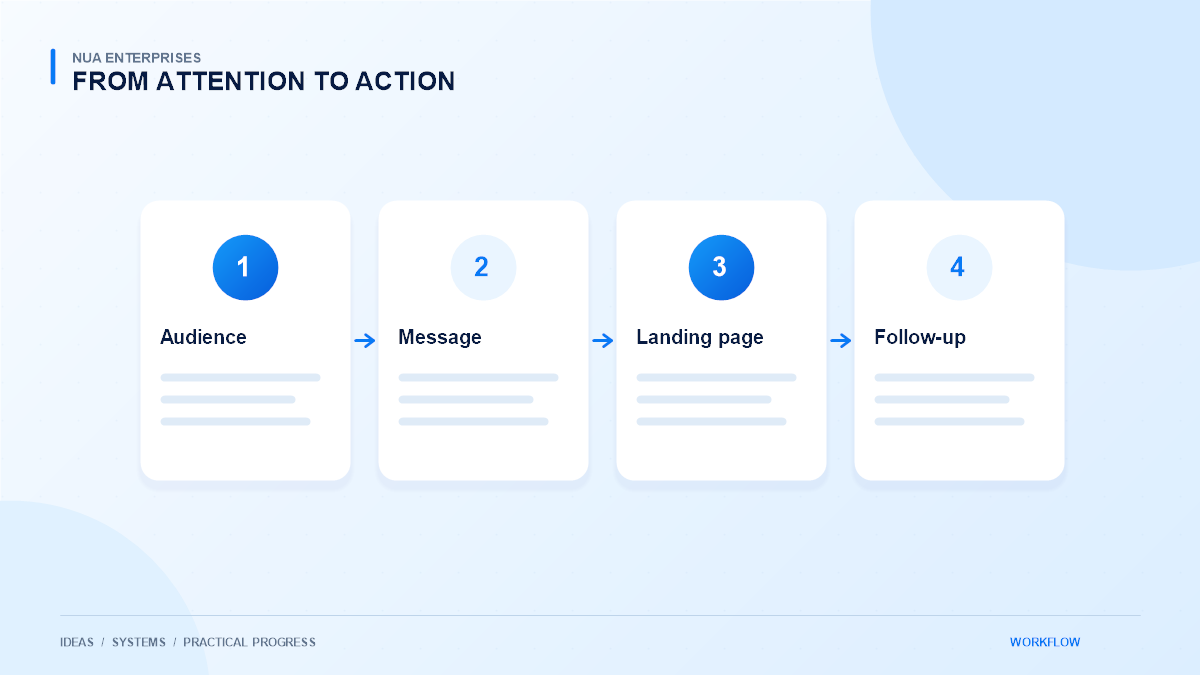
Define the audience before selecting channels
Begin with real customer questions. What problem triggers the search for help? Who researches the options, who approves the purchase, and what might delay a decision? Sales conversations, support requests, and existing enquiries can reveal patterns without inventing a complicated fictional customer profile.
A business selling software to operations teams may need detailed explanations and demonstrations. A local service provider may benefit more from clear service information and easy contact options. These differences affect the message, content format, and amount of follow-up required. Document your assumptions so they can be tested as evidence develops.
Give the offer a clear message
Explain what the business does, who it helps, and what the next step involves. Replace broad claims with concrete scope. If a service includes an initial review, a defined deliverable, and optional support, say so. Customers need enough detail to judge relevance before they provide their contact information.
Keep campaign messages consistent with the destination page. An advertisement about website maintenance should not send visitors to a generic homepage that says little about maintenance. This continuity reduces confusion and makes the campaign easier to assess because the offer remains the same throughout the journey.
Build content around useful decisions
Useful content answers questions at different stages of a purchase. Early content can explain a problem. Comparison content can clarify approaches and trade-offs. Later content can explain implementation, responsibilities, and support. Each piece should have a purpose beyond occupying a publishing slot.
For example, a software company might publish a guide to replacing spreadsheets, a checklist for selecting a system, and an explanation of its onboarding process. Link related articles and services where they genuinely help the reader. Avoid repeating the same sales message in every paragraph or treating keywords as a substitute for useful information.
Choose a manageable channel mix
Select channels according to audience behavior and the team’s ability to maintain them. Search-focused content, professional social platforms, email, and paid campaigns serve different roles. A channel that works for one business is not automatically the right choice for another.
Start with a clear owner, a realistic publishing rhythm, and a small set of formats. Repurpose an explanation thoughtfully rather than copying identical content everywhere. A detailed article may become a short visual summary or an email answer, but each version should suit the context in which customers will read it.
Prepare landing pages before increasing traffic
A landing page should confirm the offer quickly, answer likely questions, and provide one obvious next action. Keep forms proportionate to the request. Someone downloading a short checklist should not have to complete an application designed for a major project.
Test the page on a phone and confirm that enquiries reach the right person. Check thank-you messages and failed submissions. Campaign planning often focuses on getting attention, but the handoff after a click is equally important. Sending more visitors to a confusing or unreliable page simply increases the number of poor experiences.
Use paid activity with a defined experiment
Treat a paid campaign as a test of an audience, message, and destination. Decide in advance what you want to learn and what evidence would justify continuing. Keep the first experiment small enough to review carefully, and change one major variable at a time where practical.
Review the quality of enquiries
An enquiry is not necessarily a suitable enquiry. Ask the team receiving responses whether they match the intended audience and need. Avoid evaluating a campaign only through impressions or clicks. Those measures describe activity, while the business still needs to understand relevance and the quality of subsequent conversations.
Make follow-up part of the strategy
Marketing cannot finish at the contact form. Agree on who responds, what information they need, and how the customer will know the enquiry was received. A prompt, relevant reply often matters more than another decorative campaign asset.
Email communication should follow applicable consent requirements and provide a clear way to stop receiving messages. Keep lists organized and avoid collecting information without a defined purpose. Useful follow-up can answer the next question, share an appropriate example, or explain the engagement process without pressuring someone who is not ready.
Measure decisions rather than dashboard volume
Choose a few measures connected to your objective. These might include qualified enquiries, completed purchases, useful content engagement, or repeat customer activity. Ensure tracking is configured appropriately and that the team understands its limitations. Not every customer journey can be attributed to a single click.
Review the numbers alongside customer feedback. If people repeatedly ask the same question, improve the content. If enquiries are irrelevant, revisit targeting and wording. Record changes so later results can be interpreted in context rather than attributed to whichever campaign was most recently launched.
Build a repeatable improvement process
Set a regular review that asks what helped customers, what created friction, and what should be tested next. Preserve activities that produce useful outcomes and stop tasks maintained only out of habit. A practical strategy becomes stronger through disciplined learning.
NUA Enterprises can discuss how content, website journeys, and campaigns fit together within digital marketing services. Bring your current offer, audience, and available resources. The most useful starting point is a plan the team can operate consistently and improve with evidence.